Showing posts with label interview. Show all posts

9/02/2014

happy..

..a-n-n-i-v-e-r-s-a-r-y!!!

It was, to the day, one year ago that I launched this blog and invited you, for the first time, to share and taste exciting tea stories by joining an inspirational online community. Now it's time to stop for a moment and look back. Now it's time to have a birthday party. Folks, it's TEA PARTY TIME!!

Since one of the most popular sections of the blog is interviews (do I know how to ask questions or what? :-), I thought to surprise you with one for this special occasion. The interviewee will be none other than ... myself.

Hello, Anna. I read a lot about you. Now we finally meet.

My pleasure.

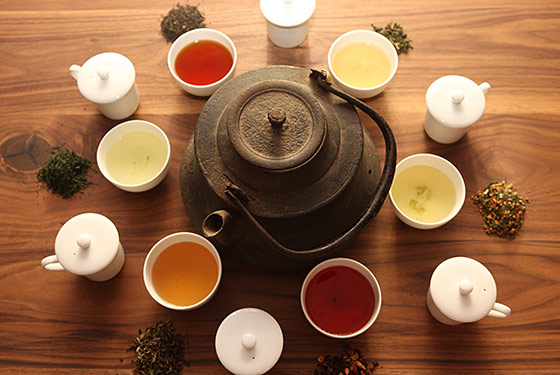
You know the reason why we sat down next this enchanting kettle of tea, right?

Yes, because we are quite alike: we both adore tea. :-) But, to be fair, there is another reason as well: the blog entered into its second year, which, in the virtual world, is already maturity. So it's a reason to celebrate.

You say maturity? So blogs are like cats? You count with seven years?

Well, you can say so. The thing about virtual surfaces is that by now it has become very easy to build your online presence, not just through social media but blogs as well. Blogs are very popular because, with their themed and personalized content, they fit the modern trend of sharing; what's more, they are free so anyone can afford, and there is a wide variety of samples and templates to help with the design. It seems, therefore, that they are easy to maintain. 

But then reality kicks in. Soon you realize it is you who needs to create the content, day by day, week by week, month by month. And there comes the effort, because it is sweaty work. Sometimes you are tired of your day. Sometimes you are fed up with having to sit at the computer constantly. Sometimes you are sick of people and you don't feel like talking anymore. Sometimes you just can't find the words and your muse seems to be on holiday. And once you skip a day, a week, a month, it's damn hard to get back. Why? Because there might not be enough motivation; there might not be enough feedback. One big disadvantage of virtual activities is that, in fact, you are on your own. After all, we are mainly doing this not for ourselves but for our audience. And it takes time and energy, in the sea of blogs, to call attention, raise interest, get noticed. Many blogs die before they could reach this point -- the point when your audience keeps you going even if you are tired, fed up, sick, and uninspired. This is why I am happy and proud to step into the second year with this blog.

Turkish tea

How do you look back on the past year?

Like a typical Hungarian, I start with the negative aspect. :-) I must admit, I also had my difficulties from time to time. After the initial (and so often irrational) enthusiasm, I slowly had to rationalize (euphemism for: reduce) the amount of posts I produce a month, in order to balance professional life, private life, and virtual life. I found it important from the first moment to keep myself from getting overly virtual, at the expense of real, physical life (even though I know the general tendency is shockingly going in the opposite direction). 

At the same time, I love writing and this blog proved to serve as a perfect platform to express myself. It grew beyond a simple "teacher's blog". It became much more than a collection of classroom stories, addressing the wider themes of languages and cultures, two passions of mine, as well. Human interaction also became a key topic of the posts. We covered issues from stereotypes and gender, to creativity and inspiration. The topics of group dynamics and self-perception were addressed not only as matters of the classroom but as matters of everyday life. 

A couple of months after the start of the blog, I launched two new sections which proved to be quite popular. In one of the interview series, we got to hear stories of expats, from Hungary, Slovenia, Germany, Romania, Japan, and the US, who chose to live in countries whose culture and language is different from theirs. From each of the subjects, we got to see the often mysticized issue of migration from a different perspective, and while all of them were positive about their experiences, they warned us also about the difficulties that usually remain hidden. In the other interview series, we got to talk with professionals who work with English in a variety of contexts, from elementary school teaching to reseach. We came to see that languages can lead you to many exciting paths.


English tea

What did you like most about the blog?

All the posts gave me pleasure (some more, some less, of course). But overall what I liked the most is the variety of topics, issues, styles, and stories I could share. I found it inspiring to talk with people, both in the form of the interviews and in the comments. I'm a curious person who can't stop exploring. This blog was a way and an excuse to pursue this quest of mine.

Although you already hinted, could you specify what you had difficulties with?

Time. And those hidden efforts it takes to keep on producing sound content. To say enough but not too much; to explain the context but not overcomplicate; to introduce new topics but stay consistent. It is hard to go back to the computer if you already spent a day in front of it; it is hard to be excited to communicate when you talked and listened all day already; it is hard to choose a virtual room when you can choose a real tea house. These are all difficulties I faced only after becoming a blogger and maintaining the blog on a regular basis, for a longer period. Everyone needs to face these dilemmas and find the path that fits them, time-wise, routine-wise, sacrifice-wise, and so on.


Japanese tea

What would you do differently if you could start over, or what are you going to do differently in the future?

Well, I don't really like to think in conditionals. I did it this way and it was OK. The blog is not perfect and my processes were not always consistent, but I always did my best. This being my first personal-professional blog, after a more restricted academic blog and a co-edited sports blog, the exploration process it entailed taught me a lot, since I had to face newer and newer challenges and find my own way. 

What I changed since I had started the blog is the frequency of posts, to be able to keep up the quality of the content. At the same time, it is perfectly understandable that at the launch I posted so much. Enthusiasm kept me going, even at the expense of other duties, which I weigh differently now. This does not mean the blog means less; it only means that I realized sustainability is an important aspect of success. I cannot keep up with posting every day or 3 times a week, like in the beginning. I needed to be realistic and see how much I can promise myself and my audience. Regularity -- what and how much people can expect from your blog -- is crucial in building a stable audience, thus, a stable blog.

Then, what can your audience expect in the upcoming year?

Intriguing stories and delicious teas from all over the world! :-) The theme doesn't change, that I can say. Also, the main sections will stay, but I am planning to enrich the selection with a couple of new flavors. Of these, you will get a taste soon. 

As for the scheduling, I will stick to the monthly posting for a bit still, due to my work duties, but once things are settled, I may be able to return to the weekly routine. 

Indian chai

Finally, what advice would you give for (prospective or practicing) bloggers?

For prospectives: give it a go. Not only is it a lot of fun, you also learn a lot while writing about a topic. It is not just the process but also the people it leads you to that will enrich you. In the end, you will realize how much more there is still to know about an issue you thought you were expert in. But be realistic: it will take a lot of time and energy. Therefore, I suggest that you launch your blog only if you care a lot about that issue, so it can keep you through the tough times (although tea and coffee help too :-).

For practitioners: let's connect. It was always a pleasure for me to get to know how other people do it, because we have a lot to share, from advice through complaint to success stories. And you can never know which friend, acquaintance or reader of yours you will help out by guiding them to your fellow blogger's page by sharing its link on your blog. 

For all my readers: thanks for your interest. It is a pleasure to share the stories and the teas with you.
Egészségünkre!


6/24/2014

the path of a TFA teacher

In the last couple of months, the interview series on English-related professions was focusing on high school teaching. We started with Edit, a veteran private school teacher in Buda, then came beginner Orsi from an elitist public school, and last month it was Bogi, a teacher assistant from a Hungary-based American private school, who gave us an overview to her educational experiences. This month it is my pleasure to introduce to you Sirena from New Orleans, who will talk about the American school system and her experiences in low performing schools.

Hey, Sirena. Nice to have you here. Could you tell us where you work and for how long you have been there? 

Thanks for having me Anna! I work at J. E. High School in Louisiana on the West Bank of New Orleans. I just wrapped up my first year of teaching (woo!) and was teaching Spanish I. 


What is an American high school like? Previously we got some insight into the Hungarian system and last month into a special institution, an American school near Budapest, Hungary. How is an American school in New Orleans? 

One thing I certainly know about American high schools is that no two are alike! I attended a large public school in a very rural small town in Kentucky with very little racial or ideological diversity and my experience was vastly different than most of my collegiate peers. All of the schools I’ve worked in thus far have all been public schools, so that’s what I’m most familiar with, but within the US there are also charter and magnet schools, which differ from public and private schools as well.

New Orleans actually has a very unique educational system since the aftermath of Hurricane Katrina in 2005. The hurricane devastated the New Orleans area with over $100 billion in estimated damages and over 300,000 homes destroyed. Before the storm nearly 30% of people in New Orleans lived in poverty and Katrina left many of the city’s poorest citizen even more vulnerable than before. With over 2,000 deaths and hundreds of thousands of evacuees Katrina certainly forced some big changes within the city. Education reformers came into the area and essentially (what can best be described as) swept away what remained of traditional public schools, replacing them with charter schools controlled by the Recovery School District. 


My school, being across the Mississippi river, remained relatively untouched by the push to charter schools, and in fact many schools on the West Bank of New Orleans remain public. My school was actually one of the first schools to reopen after Katrina and opened its doors to any student in the area who wished to immediately return to school. 

Indeed, New Orleans sounds quite unique. Is this your first school? How did you get here?

I graduated from the University of Louisville in 2013 as a political science major actually, so teaching wasn’t really on my radar until my junior year of college. During the time I became interested in education and education policy I had just begun mentoring at a local middle school and working in an after school program at a high school as well. Both schools were of very low socioeconomic status and categorized as “low performing” schools in the state of Kentucky. I quickly became very curious as to how these schools were falling so far behind other schools in the exact same city – one being the number one school in the state. This led me to the program I’m currently in, Teach For America (TFA). The vision of TFA is that “one day, all children in this nation will have the opportunity to attain an excellent education.”


Teach For America yearly recruits a diverse group of leaders with a record of achievement to work towards expanding educational opportunity, starting by teaching for two years in a low-income community. We often speak of the “achievement gap” in the United States, examining the disparity in educational achievement of students based on grouping by race/ethnicity, gender, and socioeconomic status. Since as early as 1966, studies from the US Department of Education consistently showcase a gap in achievement between low income minority students and middle to upper class white students. After studying all of this and learning more about TFA I just overall got fired up about education and wanted to dive right in! TFA places teachers all around the United States and it’s also through this program that I ended up in New Orleans!

TFA is a great way for people who may not have studied education during college to become impactful teachers so that’s the option I chose and was fortunate enough to be chosen for the program. There are so many other options as well, from the different types of schools in the US (public, private, charter, magnet) to adult education and English as a secondary language programs.

Great initiative! As I hear, you enjoy your teaching path. What do you exactly like about being a high school teacher?

I really love being a high school teacher because I can really talk to and get to know my students on a personal level. I feel so invested in them not only as students but as people. High school aged students are making hugely important decisions almost daily that impact the rest of their lives. Being able to serve as a mentor, cheerleader, educator, and friend all at the same time is something I find truly rewarding about teaching this age group.

Plus my students are absolutely HILARIOUS and not one day passes that I don't either laugh at something they've said or laugh with them about myself.

Can we also talk a bit about the downsides of the profession? What are the main challenges for you specifically and for teachers generally?

Well I've been told that the first year of teaching is generally the most difficult, so hopefully it only goes up from here but the biggest challenge for me was simply learning how to balance all the things that go along with being a teacher. Juggling grading, lesson planning, tutoring, forging relationships with students, disciplining, making copies and charts, connecting with my coworkers, reaching out to families, ALL while maintaining my friendships from college and forming new friendships with people in my new city was a LOT to handle all at once. I'm also very very competitive and goal-oriented, so I would find myself working a lot on weekends and in the evenings after school trying to figure out the exact ways to make my students the most successful. Overall this led to a lot of naps after school and stress. Luckily by December I had sorted a lot of the juggling out and was able to get into more of a routine for my second semester teaching!

As for teachers in general I think the systems that are used for evaluating what makes an effective or ineffective teacher are becoming increasingly difficult to manage. For example, Louisiana has recently made some changes and new developments in the way it evaluates teachers and many veteran teachers at my school were upset with its inequity and the ways in which it was proving to be an inaccurate measure of teacher success.

Education is a highly debated political topic in the US as well, so when federal measures are attempting to be taken to solve this re-occuring issue of the achievement gap with little success, one must question what can be done to address this challenge? 

The problem you raised is a very important one and actually not country-specific. But are there any specificities of being a teacher exactly where you are? How do you think it's different to be a teacher in Louisiana, or in the US, than anywhere else?

Teaching in Louisiana has certainly been an experience! Having worked in schools in Kentucky, and taught summer school in Atlanta, Georgia - I, again, must emphasize that every state and school has such a unique identity. From the students, families, communities and faculty, each place I've worked has its own charms and struggles.

One thing that’s unique to public schools in the New Orleans area is the intensity that comes with athletics. In general American football is a huge fulcrum for schools in the southern region of the US and our school is no exception. Myself and another teacher began a spirit club this past year to harness all the schools energy and enthusiasm for our amazing student athletes! It’s just incredible to see the way something as small as a football or basketball victory can boost school pride!


I’ll be teaching abroad for the first time at a summer program at the American University of Bulgaria during July and I’m thrilled to have the opportunity to experience the similarities and differences of teaching in the United States vs abroad.

Well, then, soon I will get back to you on this. :-) As a closing question, who would you recommend to be a high school teacher for?

I’d recommend anyone who is patient, willing to connect with students and truly passionate about impacting kids lives to be a high school teacher.  It doesn’t hurt to be strong willed and not offended easily along with that patience because high school students are moody and emotional at times ... haha!

Thanks a lot, and good luck in Bulgaria!

6/10/2014

living with and as a local


Last month I talked with Eszter, a European vagabond, who went on a 3-month-long trip in Latin America. Inspired by her story, I decided to host a fellow-traveller from Asia, who arrived from a far-far land to see our continent. In her itinerary, she had Hungary as well, so I offered her accommodation during her stay in Budapest. We talked a lot about her home, the Philippines, my home, Hungary, and the benefits of cultural exchange, like CouchSurfing. Here is a short interview with her, in which you will learn about her journey, her view about Europe and Europeans, and about a set of dazzling islands called the Philippines.


Hi, Myca! What kind of tea can I serve you?

It doesn’t matter, everything is new for me. We mostly drink coffee in the Philippines.

Really? Then I had a funny misconception, thinking that the Far-East is all about tea. 

Well, I also had my misbeliefs about Europe, like that there is no traffic jam, no flood, and things like that.

Wow, yeah, we know a lot about traffic jams. And as far as flooding in concerned, the Balkan area just experienced its largest disaster in long years.

Yes, I know. This trip of mine around Eastern Europe taught me a lot.

So, where exactly have you been?

I landed in Germany a month ago, then moved on to Salzburg, Austria. From there, Slovenia came, with Ljubljana and Bled. My next stop was Croatia, where I checked not only Zagreb but Plitvice, Pula, and some surrounding sea resorts as well. After that, I came to Hungary, more specifically to Budapest, Szentendre, and Eger. From here I will move on to Prague, in the Czech Republic, and from Hamburg I will fly home to the Philippines.


Then, your trip is approximately a month long, right?

That’s right. That’s how much I can stay away from my job in sales. Of course, the journey had financial limitations too: it was partly because of the money that I decided to choose Eastern and Southern Europe as the destination of my first roundtrip. The other reason was because I wanted to see new things and less popular places.

What did you like the most? Any favorite spot so far?

Hard to pick one. There were amazing things everywhere. I couchsurfed most of the time and my hosts, local experts, took me to beautiful places. One of the best days of the trip was when we went around tiny little towns in Dalmatia. Also, to mention something strange I encountered, never before have I seen people so casually (un)dressed as around those beach towns. Men walking in light green trunks or women in monokinis.

Was this then the biggest culture shock?

Yes. I wouldn’t say I was too shocked by anything. If you ask how people in the Philippines are different from the Europeans, maybe what can be said is that there are much more of us (100 million). Really, one of the most populated lands are the Philippines! And there are many languages and tribes on the several islands that constitute the Philippines. Maybe because of this, people are very welcoming wherever you go in the country. They invite and host anyone no matter where they come from.


But in the end you were hosted by Europeans as well, right?

Yes, I stayed at people’s place most of the times, only 1 o 2 occasions in a hostel. I like to live with and live as a local and I was lucky with each of my hosts. I can only recommend CouchSurfing.

I also like the concept of it, but at the same time I think one needs to address certain risks too. Did you ever feel lonely and vulnerable during this relatively long journey of yours?

I would say that I enjoyed every day of it but sometimes I felt I just want to go home. I guess not because I couldn’t take any more new experiences, that is, it is not that I got filled. It is more that I missed my family and my home. I love the Philippines! I told a lot of stories about my country to most of my hosts. About the monsoons, the floods, the Chocolate Hills, the island transportation, the dialects, and a lot more.


Indeed, I learned a great deal from you about this land that I had hardly known before. You mentioned the language. How did you manage with communication on your trip?

In the Philippines the second official language is English, because the land was occupied by the Americans. As a lucky consequence, I (and many of my compatriots) are fluent in English. In the countries I visited, like Croatia, Slovenia, or Hungary, it was not so. Many of the people don’t speak English, but all in all I always managed. Language was not a problem if you want to get a message across.

Good to hear! What’s up for you now?

Well, I will go home soon, about which I am happy, but I will also be happy to work hard and save some money for my next trip. It is definitely to repeat! I will either come back to visit some of the places I missed this time, like the Balkans, or I will aim for Western Europe, but that will cost much more. I’ll see.


Good luck with that. And have a safe trip to Prague and to Manila!

5/20/2014

the path of an international school teacher

This is already the 5th piece of our monthly interview series which offers us to gain insight into the diverse career paths one can pursue with a sound English knowledge (and most often, a degree in English studies). First we took a look at university jobs, from the perspective  of an experienced instructor and a beginner lecturer, then we turned to high education, through the lenses of an older teacher in a religious school and a younger educator in a state school. This time it is my pleasure to introduce Bogi, a high school teacher assistant, and her peculiar institution, which is a private American school. Let us see what she has to tell us. 

Hello, Bogi. Thank you for your time. As a short introduction, could you tell us where you work and for how long you have been there? 
Hello, Anna! Thank you for taking the time to interview me. I feel honored that you chose to write about me in your blog. To answer your question, I currently work at a Budapest-based international school as a High School Teacher Assistant. I have been working here for almost two years now, and I really enjoy being part of such a great community that my school has.
What is special about your institution? What is the difference between your school and a regular state school?
As ours is an international school, as opposed to a regular Hungarian one, the list of differences between the two would be pretty long. First of all, the language of instruction at our school is English only, and most teachers and students do not even speak Hungarian. Our students are usually used to traveling and moving from one country to another because of their parents' job, so they are very flexible and open-minded. These families rarely stay in the country for too long, so our school always have a lot of students coming and going each year. 

That must be pretty challenging for the teacher as well. Before this school, have you taught in any other environment?
I have started my career at this school right after I graduated from university at the age of 23, and I have immediately fallen in love with international teaching and the atmosphere that it comes with it. For this reason, I'm sure I would enjoy teaching abroad at an international school, and it doesn't really matter in which country. But I know it has to be an international school, as I really appreciate the diversity and open-mindedness international schools offer. 
Sounds great indeed! How is the education of an international school  structured as opposed to a local, let's say, regular, school? 

As far as I can see, education at our school is all about emphasizing critical thinking skills, inquiry-based learning, and creativity. We think developing the whole child is really important, and we encourage tolerance and cross-cultural understanding. All these values that we share make our education system unique in its own way, and I think this is how our form of education differs from others -- in its vision and values. 

What do you like about being a teacher here? 

I love the fact that students here are all global citizens, they love traveling, they are very open and curious about other cultures, and most of them speak multiple languages. Also, I feel like I've become a member of a very caring community since I got here, which is yet another reason to like the school. The cherry on the cake for me is that people here always thank you for everything you do. I find it a very nice custom, as it makes you feel appreciated at your workplace. I have to tell you, it was kind of new for me. I had to get used to being thanked for doing my job all the time. I like it! :)


No wonder! :-) But let's be realistic and talk about the tough cookies as well. What are the main challenges for you, and what do you think are the main challenges of state school teachers? 

The main challenge for us is that our classes change a lot every year. We always have a number of newly-enrolled students, and sadly, we need to say good-bye to many of our students at the end of each year. It's quite hard to keep up with this always changing environment, and it's also not an easy job to make a bunch of students who do not know each other that well into a community. I believe teachers at my school do a very good job with this matter. 

In state schools, teachers face very different difficulties. They need to deal with a growing number of students in one classroom, they have financial issues, and the administrative work of teachers takes up a lot of their time. Of course I can only say these things based on what I hear from my colleagues, and I'm sure not everyone has the same problems, but I know for sure that we (I and my teacher friends working at state schools) almost never complain about the same issues. 

Which is a bit odd. I guess then, students -- invariables in education -- are no problem, at least not the major. :-) So, finally, tell us who you would recommend a career in your school to. What is the ideal candidate like?
If you would like to become an international teacher, you need to share certain values that all international schools base their mission and vision on (open-mindedness, tolerance, and cross-cultural understanding, to name a few). 

I recommend that you pursue your career at a school like ours if you are prepared to deal with kids from very different cultural backgrounds, having all sorts of unusual issues (stemming from their lifestyle, their family background, their financial background, their religion, and so on). It helps if you enjoy traveling, as there are many opportunities around the world that you can explore as an international teacher. Once you are in international teaching, you will probably feel like moving abroad and experience new things. If you like challenges, you are the perfect candidate! :)
Thank you, Bogi! It was a pleasure!